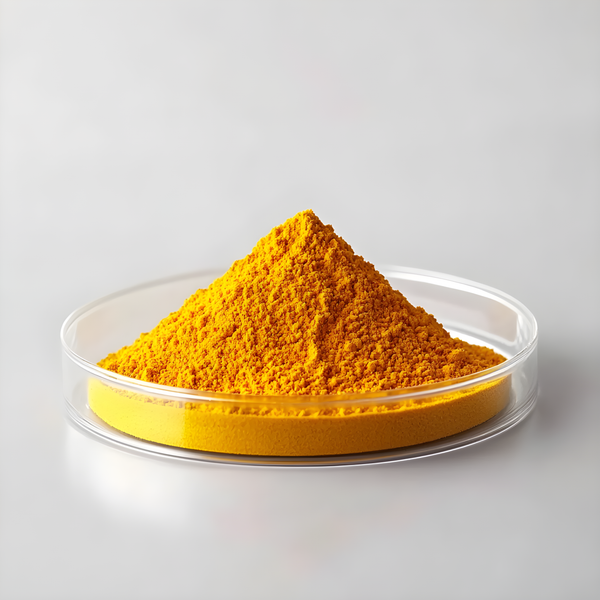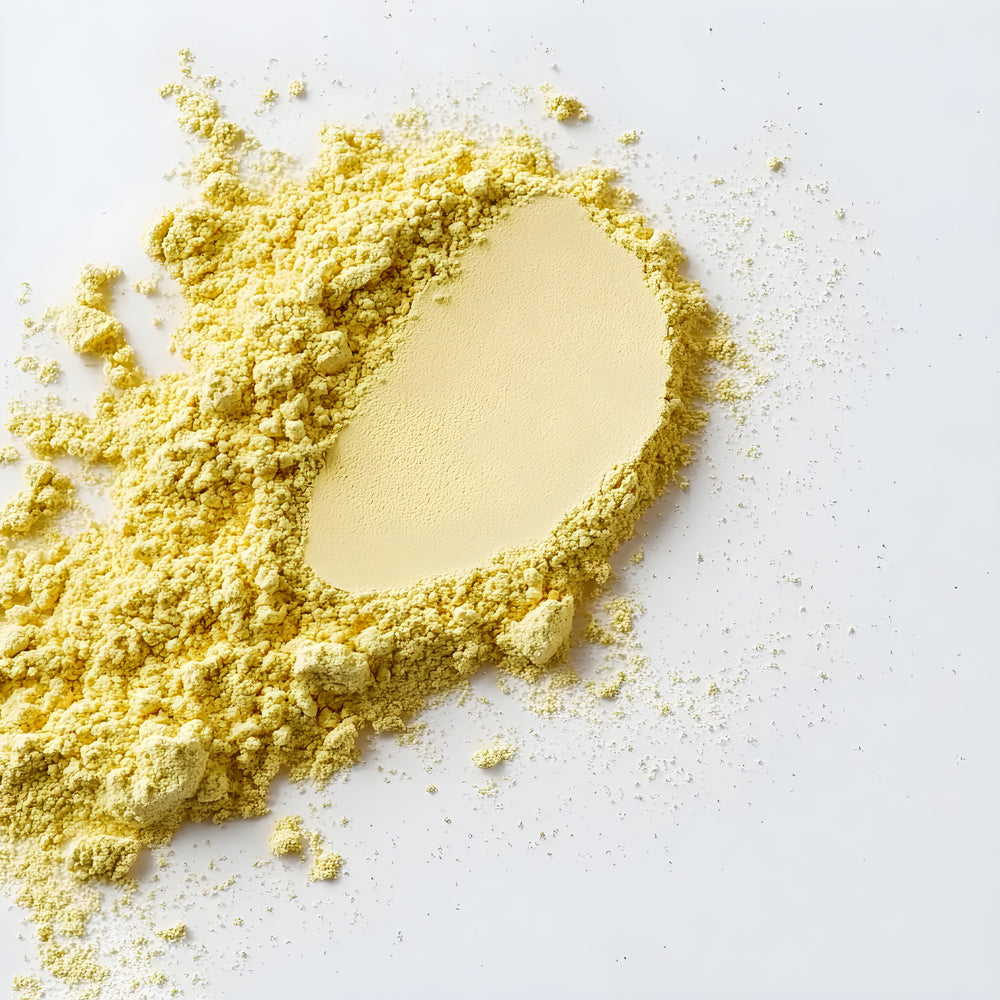
Fisetin.
A flavonoid found in strawberries and the smoke tree.
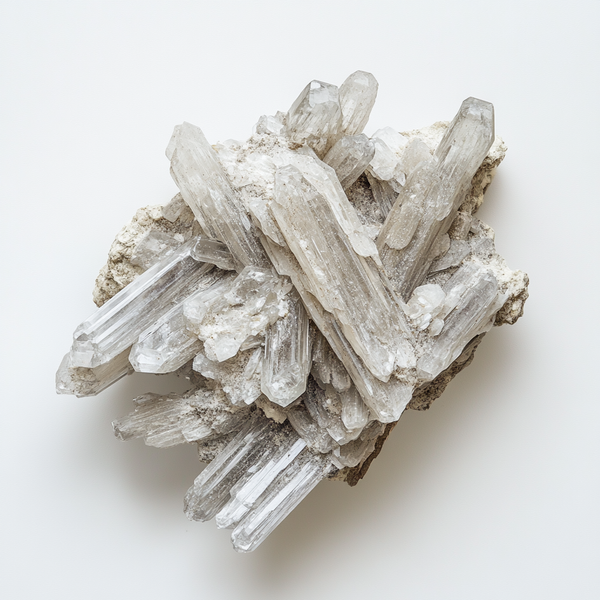
Fisetin is a natural plant compound, a flavonoid, found in strawberries, apples, onions and other fruits and vegetables. It has strong antioxidant and anti-inflammatory properties, and it’s being explored for brain health: it supports the body’s natural ability to manage ageing, or senescent, cells, which helps keep cells healthy for longer.
Overview
| Also called | 3,3′,4′,7-tetrahydroxyflavone |
|---|---|
| Type | Flavonoid: a flavonol, one of the plant polyphenols |
| Comes from | Strawberries, apples, persimmons and onions. Supplements often extract it from the stem of the smoke tree (Cotinus coggygria) |
| Key compounds | Fisetin itself, a polyphenol with antioxidant activity |
| In Axolt | 120 mg of smoke tree stem extract, providing 100 mg of fisetin |
Introduction to fisetin
Fisetin belongs to the flavonols, the same family of plant polyphenols as quercetin. Strawberries are the richest everyday source, but the amounts in a normal diet are small.1 Senescent cells are old cells that have stopped working but don’t die. They build up with age and feed inflammation.4 By helping the body’s own cell-clearing processes, fisetin supports overall cellular health and longevity,3 and it has been studied in several brain conditions.2,6
Role in brain health
Fisetin supports brain health by reducing oxidative stress and inflammation in the brain.
- It supports the brain’s natural waste-clearance (glymphatic) processes,3,5 helps maintain healthy brain cells and their function,1 supports the integrity of the blood-brain barrier8 and is associated with neuroplasticity and healthy BDNF levels, a protein that helps brain cells grow.
What the studies found
- Fisetin helps the brain clear senescent, or ‘zombie’, cells and supports its natural waste clearance. It’s in the formula for long-term brain health. The evidence so far comes from lab and animal studies; human trials are ongoing.3
- In older mice, fisetin lowered markers of senescent cells in several tissues, and the treated mice stayed healthy for longer and lived longer.3
- In mice given amyloid-beta, a protein linked to brain ageing, fisetin reduced signs of brain inflammation and helped protect memory and the connections between nerve cells.5
- In old mice, short courses of fisetin improved how well the arteries worked, by reducing the number of senescent cells in the artery wall.7
Lab and animal results don’t always carry over to people. They’re listed as part of the science, not as a promise.
How we formulate it in Axolt
Axolt is built for long-term brain health: everything the brain needs to work well today, without stimulants or nootropics that may cost it later, while protecting how it works for years to come. It’s also made for people already noticing signs of cognitive decline. One driver of that decline is ‘zombie’ senescent cells: as the brain’s clearing slows with age, they linger and spread damage. Fisetin helps the brain clear them.3,7 It comes from smoke tree stem extract, 120 mg per sachet, providing 100 mg of fisetin.
About Axolt
Axolt is a daily brain supplement for steady focus and calm. One sachet in water each day covers 46 ingredients: vitamins, minerals, amino acids and plant extracts, including fisetin. It is made to be taken every day, so its effects can build over weeks. Every batch is third-party tested by Eurofins.
Discover AxoltQuestions about fisetin
Which foods contain fisetin?
Strawberries are the richest everyday source, with smaller amounts in apples, persimmons and onions. The amounts in food are far lower than those used in research.
Has fisetin been tested in people?
Most of the research so far is in cells and animals, where the results on ageing cells and brain health are consistent. Human trials are ongoing.
Is it safe to take every day?
It’s part of everyday foods, but supplement amounts are higher. If you’re pregnant, breastfeeding or take blood-thinning medicines, check with your doctor first.
References
- Pal HC, Pearlman RL, Afaq F. Fisetin and its role in chronic diseases. Adv Exp Med Biol. 2016;928:213–44.
- Tang X, Deng P, Jiang Y, et al. An overview of recent advances in the neuroprotective potentials of fisetin against diverse insults in neurological diseases and the underlying signaling pathways. Biomedicines. 2023;11(11):2878.
- Yousefzadeh MJ, Zhu Y, McGowan SJ, et al. Fisetin is a senotherapeutic that extends health and lifespan. EBioMedicine. 2018;36:18–28.
- McHugh D, Gil J. Senescence and aging: causes, consequences, and therapeutic avenues. J Cell Biol. 2018;217(1):65–77.
- Ahmad A, Ali T, Park HY, et al. Neuroprotective effect of fisetin against amyloid-beta-induced cognitive/synaptic dysfunction, neuroinflammation, and neurodegeneration in adult mice. Mol Neurobiol. 2017;54(3):2269–85.
- Cordaro M, D’Amico R, Fusco R, et al. Discovering the effects of fisetin on NF-κB/NLRP-3/NRF-2 molecular pathways in a mouse model of vascular dementia induced by repeated bilateral carotid occlusion. Biomedicines. 2022;10(6):1448.
- Mahoney SA, Venkatasubramanian R, Darrah MA, et al. Intermittent supplementation with fisetin improves arterial function in old mice by decreasing cellular senescence. Aging Cell. 2024;23(3):e14060.
- Mehra S, Ahsan AU, Sharma M, et al. Gestational fisetin exerts neuroprotection by regulating mitochondria-directed canonical Wnt signaling, BBB integrity, and apoptosis in prenatal VPA-induced rodent model of autism. Mol Neurobiol. 2024;61(7):4001–20.